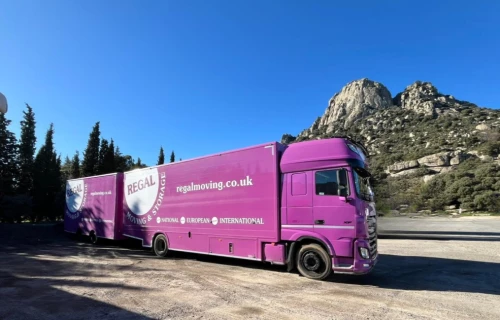

Moving to Spain from the UK is straightforward once you know the order to do things in. Post-Brexit, British citizens are no longer EU residents, so you'll need the right visa before you go, a plan for your belongings, and a rough idea of what your move will cost and how long it will take. This guide covers the practical steps: residency basics, likely costs and timelines, what's worth shipping versus buying new, and what to expect if you're bringing a car or a pet.
This is a general guide, not legal or tax advice. For visa and residency rules, always check the official Living in Spain guidance or speak to an immigration adviser before you commit to a date.
Visas and Residency: What Changed After Brexit
British citizens can no longer live in Spain without a visa. Since Brexit, UK nationals are treated as third-country nationals under Spanish immigration law. You can still visit for up to 90 days in any 180-day period without a visa, but anything longer, including relocating permanently, requires the correct permit before you travel.
The main routes UK nationals use to move to Spain include:
- A non-lucrative visa, for those with sufficient funds who don't plan to work in Spain.
- A work and residence visa, sponsored by a Spanish employer.
- A self-employment visa, for those setting up as autónomo.
- A student visa, for long-term study.
Once you arrive, most residents need to apply for an NIE (Número de Identidad de Extranjero) and, for longer stays, a TIE residence card. You'll also need to register your address at the local town hall (padrón).
Because visa categories, income thresholds and required documents change, always check current requirements on gov.uk before applying. We are removals specialists, not immigration advisers, so we won't guess at rules that affect your legal right to stay.
What Does It Cost to Move to Spain from the UK?
There's no single figure for the cost of moving to Spain, because it depends on how much you're taking, your route, and the service level you choose. Three things drive most of the cost:
- Volume - a one-bedroom flat costs less to move than a four-bedroom house.
- Service type - a dedicated vehicle for your move alone costs more than a shared, part-load service.
- Packing and storage - full export packing and any UK storage before or after your move add to the total.
Beyond the removal itself, budget for visa application fees, healthcare arrangements, and setting up a Spanish bank account, which typically requires an NIE. We don't publish a fixed price list for removals to Spain because every move is different. Our European removals page explains the cost drivers in more detail, and we give a free, itemised quote once we know your move details.
Typical Timelines for a Move to Spain
Give yourself more time than you think you'll need. A realistic sequence looks like this:
| Stage | What's involved |
|---|---|
| 3 to 6 months before | Confirm your visa route, gather documents, start the application |
| 2 to 3 months before | Book your removal, arrange export packing, confirm your Spanish address |
| 4 to 6 weeks before | Finalise customs paperwork, arrange pet travel if needed, sort UK admin (banks, HMRC, GP) |
| 1 to 2 weeks before | Confirm collection date, finish packing, register your address change |
| After arrival | Register on the padrón, apply for your TIE if required, set up local services |
Transit time for the removal itself depends on your collection point, your destination in Spain, and whether you choose a dedicated or shared load. Routes into southern Spain generally take longer than northern France or Belgium simply because of the distance involved. We confirm a realistic delivery window once we know your route and service type.
What to Move and What to Buy in Spain
Not everything is worth shipping. Before you book a removal, it's worth deciding what makes the trip and what doesn't.
Generally worth taking:
- Furniture you're attached to or that's good quality and hard to replace.
- Electrical items that work with UK plugs and voltage, since Spain uses the same 220 to 240V standard.
- Sentimental items, books, and anything irreplaceable.
- Specialist or valuable items such as pianos or antiques, which are worth professional export packing.
Often better to buy locally:
- Large appliances that may not fit Spanish kitchen layouts.
- Bulky flat-pack furniture that's inexpensive to replace and costly to ship.
- Items tied to UK broadcasting or infrastructure standards that won't be useful in Spain.
If you're unsure whether something is worth shipping, our team can talk through it as part of your quote for anything fragile or high-value that is making the move.

Moving with Pets to Spain
Bringing a pet from the UK to Spain since Brexit means treating the UK as a "non-listed" third country for pet travel, which adds a few extra steps compared to before. In general, your pet will need:
- A microchip that meets ISO standards.
- A rabies vaccination, given after the microchip and at least 21 days before travel.
- An Animal Health Certificate (AHC) issued by an official vet no more than 10 days before travel, replacing the old EU pet passport for UK-issued documents.
- Entry via an approved travel route or point of entry.
Requirements can change, so confirm the current rules with your vet and check gov.uk's guidance on taking pets abroad before you travel.
Taking a Car to Spain
If you're planning to take your own vehicle rather than buy one locally, there are a few things to look into early:
- Vehicle registration - importing a UK-registered car into Spain involves customs formalities and Spanish registration (matriculación).
- Driving licence - check whether your UK licence needs exchanging for a Spanish one, and by when.
- Insurance - UK motor insurance does not automatically cover you long-term in Spain, so you'll need Spanish cover.
- Low-emission zones - several Spanish cities, including Madrid and Barcelona, operate low-emission zones that may affect older vehicles.
These rules sit with the DGT (Spain's traffic authority) and Spanish customs, not with us, so check current requirements directly before you commit to shipping a car rather than buying one in Spain.
How Regal Moving & Storage Handles the UK-Spain Route
We run UK-Spain removals for homes and businesses moving to destinations including Madrid, Barcelona, Valencia, Alicante and the Costa del Sol. As a BAR (British Association of Removers) member with BSI ISO 9001 and ISO 14001 certification, every move is backed by the BAR Advanced Payment Guarantee, and you get a dedicated move coordinator from first enquiry through to delivery.
For the Spain route specifically, our team handles export packing to full export standard, prepares the customs paperwork your move needs, and can bridge the gap with secure UK storage, including self storage units, containerised wooden container storage, and mobile collect-and-deliver storage, if your Spain move date and your UK moving-out date don't line up.
Full detail on the route, services and destinations we cover is on our Spain removals page, or see our wider European removals services for other countries and routes.
Moving to Spain FAQs
Yes, if you're staying longer than 90 days. British citizens can visit Spain visa-free for up to 90 days in any 180-day period, but moving there permanently or for an extended stay requires the correct long-stay visa, such as a non-lucrative, work, or self-employment visa. Check current requirements on gov.uk.
Start Planning Your Move to Spain
Whether you’re still working out your visa route or ready to book your removal, getting your move to Spain organised early makes the whole process easier. Our team handles the export packing, customs paperwork and delivery logistics, so you can focus on the move itself.
Contact us today for a free, no-obligation quote on your UK-Spain removal.